
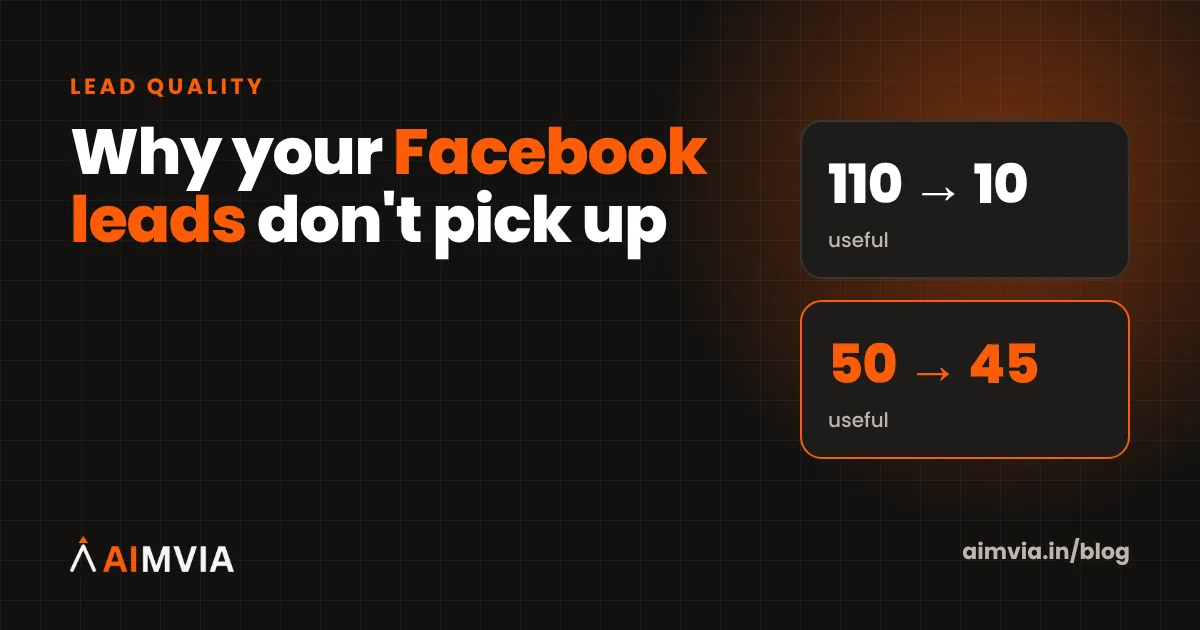
Here is a choice every business faces with Facebook ads: 110 leads where only 10 pick up the phone, or 50 leads where 45 are ready to talk. The second option costs more per lead and makes far more money.
Lead quality is rarely luck. It comes down to three things you control.
1. Your form makes leaving a number too easy
Meta's instant forms pre-fill a person's name and phone number. One tap and they are a "lead", sometimes without reading the ad. Fixes:
- Switch the form type to Higher intent, which adds a review step before submitting.
- Add one or two qualifying questions, such as budget, timeline or service needed.
- Say clearly what happens next: "We'll call you within an hour."
2. Your offer attracts the wrong people
"Free" brings everyone, including people who will never buy. Make the ad speak to your real buyer: name the problem, the price range or who it is for. Fewer people click, and more of them are worth calling.
3. Your follow-up is too slow
This is the big one. A Harvard Business Review study of 1.25 million sales leads found that companies who contacted a lead within an hour were nearly 7 times more likely to qualify it than those who waited even one more hour, and more than 60 times more likely than those who waited a day or longer.
The same research audited 2,241 US companies. Only 37% responded within an hour, and 23% never responded at all.
Source: Harvard Business Review, "The Short Life of Online Sales Leads" (2011). Values are percentages.
The fix, step by step
- Connect your lead form to your phone, CRM or WhatsApp, so every lead arrives instantly.
- Call within 5–15 minutes during working hours.
- If they don't answer, send a short WhatsApp or text message straight away, then try again later that day.
- Track which ad each good lead came from, and move budget there.
- Tell Meta which leads were real, through the Conversions API or offline events, so it finds more people like them.
Judge ads by good leads, not all leads
A $5 lead that never answers is more expensive than a $15 lead who books a call. Track cost per qualified lead, and you will often find your "cheapest" ad set is your most expensive.
Sources
Frequently asked questions
Why do my Facebook leads not answer the phone?
Usually because instant forms make submitting too easy, the offer attracts the wrong people, or follow-up is too slow. Use higher-intent forms, qualifying questions and call within an hour.
How fast should I call a Facebook lead?
Within an hour at most, and ideally within 5–15 minutes. Research shows companies contacting leads within an hour are far more likely to qualify them.
Are Facebook lead form leads bad?
Not by default. With higher-intent forms, a qualifying question and fast follow-up, lead form leads can be as good as website leads.
Want us to run this for you?
Meta and Google ads for B2B and D2C brands in the US, UK and Australia: research, 10–15 creatives, ad set testing and weekly reports. Month to month.